
The HeartTouch Approach
A Different Understanding of Wellbeing
HeartTouch is a practical approach to wellbeing rooted in the Japanese embodied traditions of Sei-Ki and Seitai. Through lived experience, many years of embodied practice, teaching and supporting people facing a wide range of wellbeing challenges, it has gradually evolved into a distinct approach centred on embodied mindfulness and compassionate human connection.

While many approaches focus primarily on changing thoughts, managing emotions or reducing symptoms, HeartTouch begins somewhere different.
It begins with the body.
At the heart of the approach is a simple observation: when we begin to feel genuinely safe, the body naturally starts to reorganise itself in ways that cannot be forced through willpower or intellectual understanding alone.
How the Approach Developed
The HeartTouch approach has developed through Anthony Fidler's many years of practice, teaching and lived experience.
It is rooted in his long study of Sei-Ki, a Japanese approach to Hara Training and Ki Therapy developed by Akinobu Kishi. It has also been influenced by the wider Japanese tradition of Seitai, founded by Haruchika Noguchi, through Anthony's study with Kayo Tatebe.
HeartTouch has continued to evolve through many years of working with people, alongside Anthony's practice of Zen, Tai Chi and Qi Gong, and his own lived experience of chronic stress, burnout and overwhelming inner experiences.
These different influences have gradually been integrated into a practical approach with its own language, principles and applications.
Embodied Mindfulness
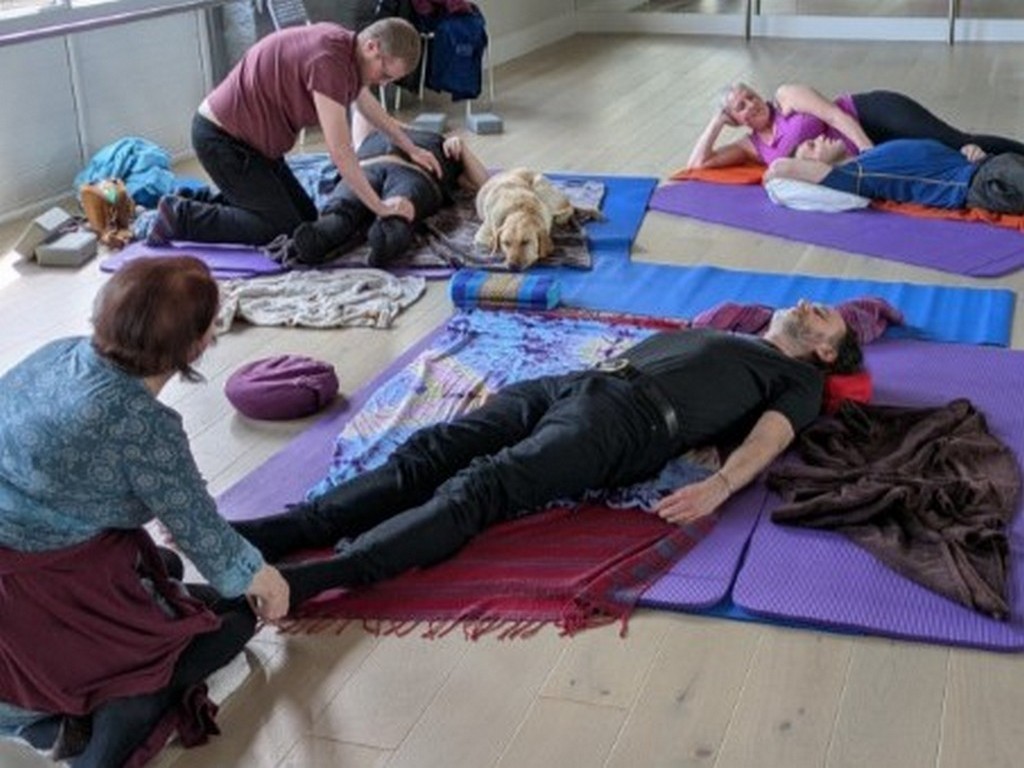
Embodied mindfulness is a way of being in which we feel deeply rooted in our bodies, fully present to our experience and warmly connected with ourselves and those around us.
As body and mind become more deeply integrated, wellbeing, resilience and authentic human connection naturally emerge.
Rather than being simply a technique, embodied mindfulness becomes the foundation from which we relate differently to ourselves, to others and to life itself.
An Unravelling Process
Many of us carry patterns of stress, trauma and protection that were once intelligent responses to difficult circumstances. They helped us survive when we had few other ways of responding.
Over time, however, these responses can become habitual, making it difficult to feel fully safe, present and connected with ourselves and others.
HeartTouch is an unravelling process in which these habitual patterns gradually soften as we rediscover a sense of safety within ourselves. As we become more deeply embodied, we naturally become more open to genuine human connection.
HeartTouch does not seek to break down protective patterns or force change. Instead, it helps create the conditions in which patterns that are no longer needed can gradually soften in their own time.
The Body's Natural Intelligence
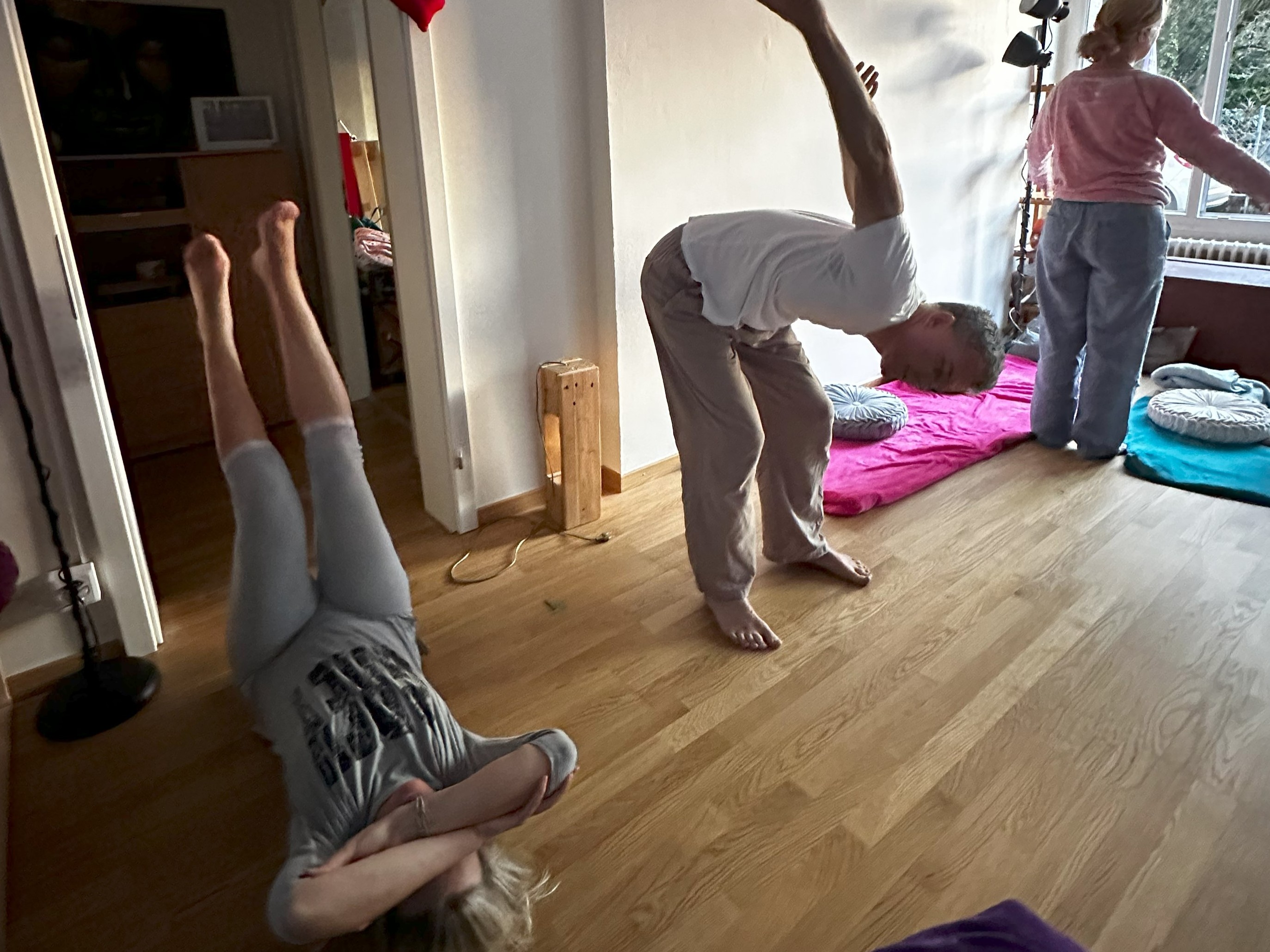 HeartTouch workshop in Switzerland - Regulating Movement
One of the central ideas of the HeartTouch approach is that the body possesses its own natural capacity for self-regulation, adaptation and integration.
This process does not depend primarily upon analysing or intellectually understanding our experience. While insight can certainly be valuable, lasting change often begins much deeper than thought.
Through embodied mindfulness, compassionate human connection and simple embodied practices, HeartTouch seeks to create the conditions in which the body's natural intelligence can emerge.
As a greater sense of safety develops, long-held patterns of tension and protection may gradually soften, allowing greater presence, freedom and wellbeing to arise naturally.
Safety and Human Connection
Many people begin this journey through individual embodied practice. Simply becoming more present, grounded and embodied can bring profound changes.
Yet there is often another depth that becomes possible through safe and compassionate human connection.
As we become able to genuinely meet another person, further layers of protection may gradually soften, allowing the process of unravelling to continue in ways that can be difficult to experience through individual practice alone.
HeartTouch therefore recognises human connection not simply as a source of emotional support, but as an important part of how embodied change can continue to unfold.
Compassionate Touch
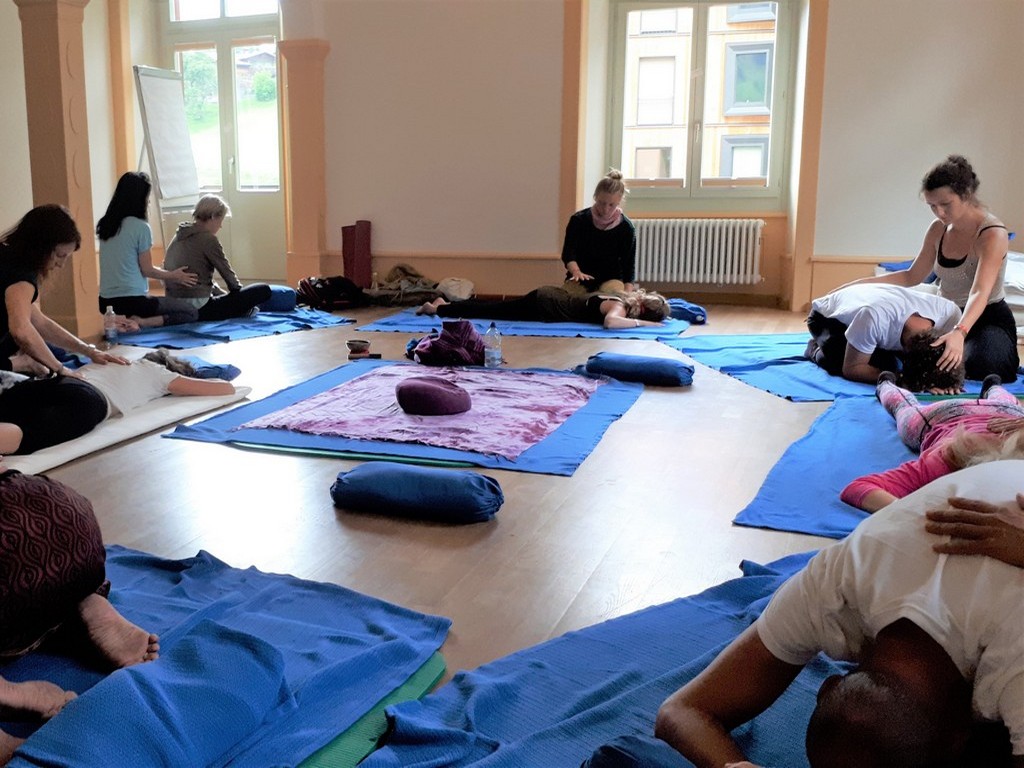
HeartTouch can be practised entirely without touch. Connection naturally develops throughout the workshops through shared practice, presence and the quiet resonance that emerges as people become more deeply embodied together.
Where appropriate, compassionate touch offers one further way of exploring this connection through direct embodied experience.
It is introduced only after participants have had time to develop a greater sense of grounding, regulation and safety within themselves, and all practices are approached with clear boundaries, mutual respect and complete choice.
The intention is not to perform a therapeutic technique or produce a particular outcome, but simply to meet another person with mindful, compassionate presence.
Within this atmosphere of safety and trust, experiences of greater ease, regulation and healing may arise naturally as positive side-effects of the meeting.
Lived Experience as a Resource
HeartTouch recognises the unique value of lived experience when it is brought together within a community. People who have experienced addiction, overwhelming inner experiences or other forms of suffering often understand aspects of those experiences that can be difficult for others to fully appreciate. This shared understanding can help reduce isolation and create a sense of being genuinely seen and understood.
At the same time, HeartTouch recognises that lived experience alone is not enough. When we are overwhelmed or profoundly dysregulated, much of our energy is naturally directed towards our own survival. At these times, it can be difficult to offer a settled, compassionate presence to another person, however much we may wish to.
Through embodied mindfulness, many people quickly discover moments in which they feel far more safe, grounded and present than they expected possible. Within these moments, long-held patterns of protection may soften sufficiently for them to relate differently both to themselves and to those around them.
As people become reasonably regulated and feel safe enough to open towards others, they are increasingly able to meet one another with presence rather than protection. Within this quality of meeting, compassionate touch can become a shared exploration rather than something one person does for another. Each person brings their own lived experience, sensitivity and humanity to the encounter, allowing a natural resonance to emerge between them. In this way, both people may benefit from the meeting.
These experiences are not necessarily permanent. As people return to the challenges of everyday life, old patterns may naturally re-emerge. Yet each experience of embodiment leaves a trace. Through repeated experiences of safety, presence and compassionate human connection, habitual patterns of stress, trauma and protection can gradually soften, making it easier to return to a more embodied, regulated and connected way of being.
One Approach, Many Applications
HeartTouch is the foundation that underpins all of our work. The same embodied principles remain at the heart of every workshop, course and specialist programme.
Whether supporting people experiencing anxiety, chronic stress, burnout, addiction, long-term health conditions or overwhelming inner experiences, each programme applies the same underlying approach to the particular needs and circumstances of the people it serves.
A Living Approach
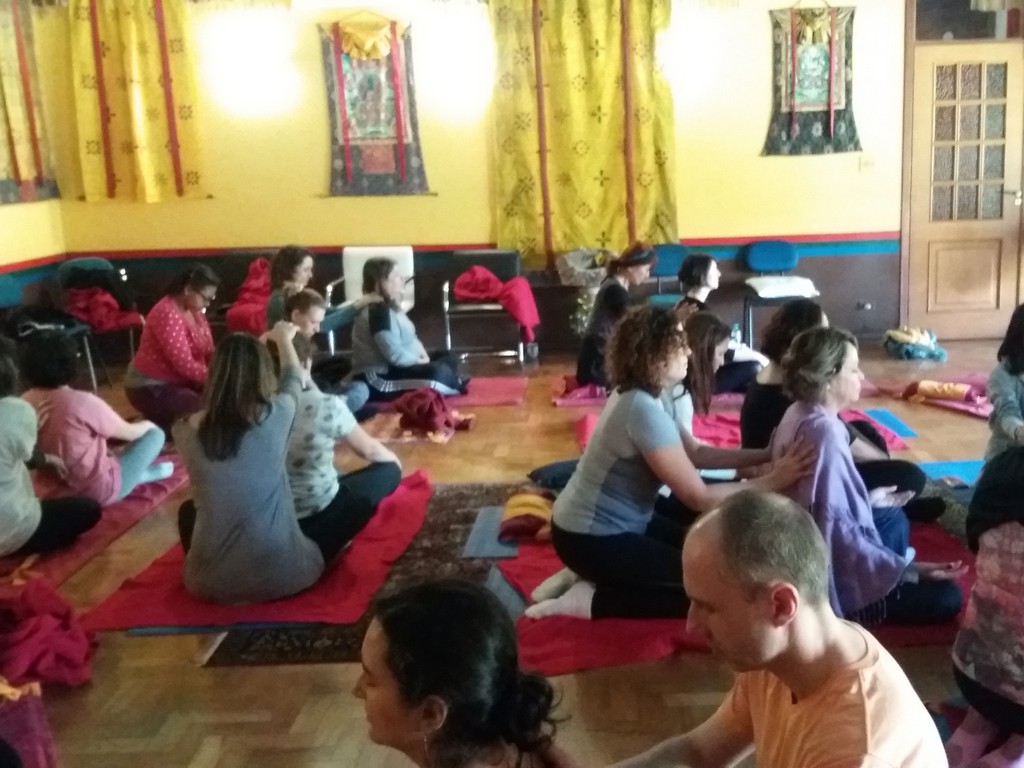
HeartTouch continues to evolve through embodied practice, careful observation and ongoing dialogue with the people who take part in its workshops and programmes. As the approach has developed, many of its observations have resonated with ideas found in mindfulness, compassion-focused therapy and contemporary understandings of nervous system regulation. These and other models provide valuable points of dialogue that can help illuminate particular aspects of the work.
HeartTouch does not seek to replace existing psychological, therapeutic or scientific perspectives. Instead, it contributes to the wider conversation by exploring the body's natural capacity for self-regulation when the conditions of safety, embodiment and presence are cultivated.
HeartTouch recognises that no single perspective is sufficient on its own. People with lived experience, clinicians, psychotherapists, bodywork practitioners, researchers and other wellbeing professionals each bring valuable forms of knowledge. By remaining open to dialogue between these different ways of understanding, the approach continues to deepen while remaining rooted in lived human experience.
Rather than offering a fixed system, HeartTouch is intended as a living approach that continues to evolve as our understanding of embodiment, wellbeing and compassionate human connection grows.